
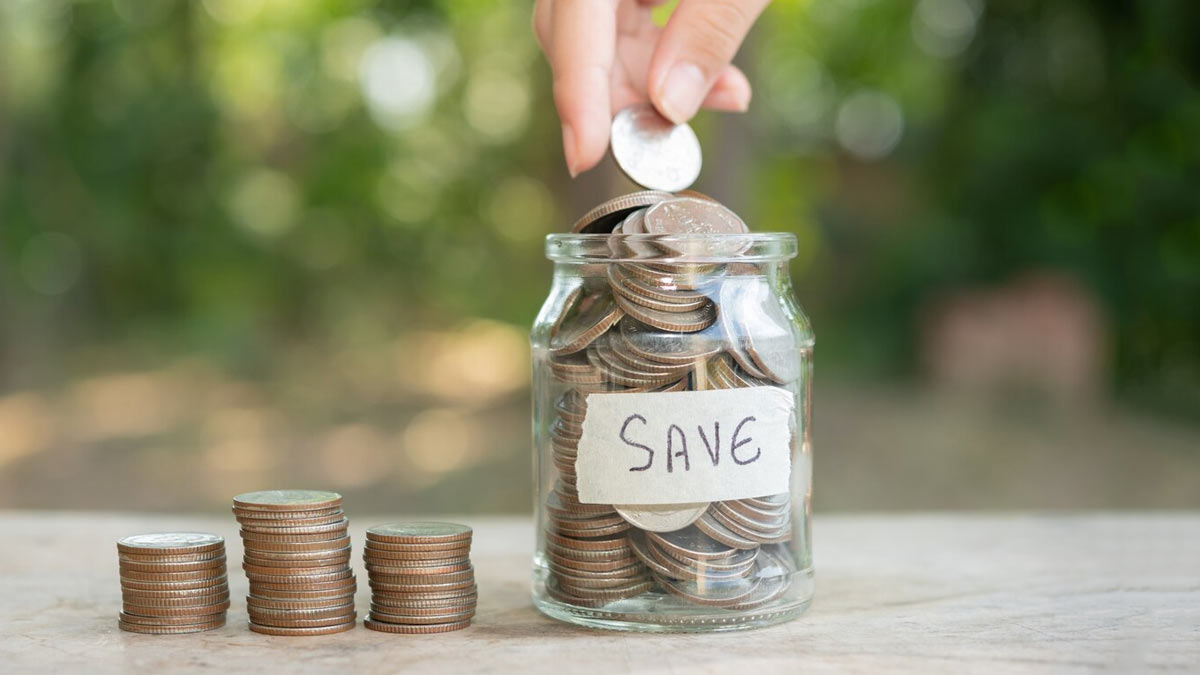
You can learn how to save money on a small salary even when your paycheck barely covers your rent and bills. Last year, Sarah was making $2,400 a month after taxes and felt stuck. She had zero dollars in her bank account on the day before payday, but six months later she had saved her first $1,000.
The secret is not making more money right away. It comes down to moving a tiny amount of cash out of your hands before you spend it, and cutting small costs that you do not even notice. You can build real savings on a low income without giving up every fun thing in your life.
Stop waiting to save what is left over
Most people try to save money the wrong way. They pay their bills, buy groceries, spend cash on everyday items, and hope some money stays in their account at the end of the month. Usually, nothing is left. The money just disappears on takeout meals, extra groceries, or small online orders.
You must pay yourself first. On the day your paycheck lands in your account, move money to savings right away. Do not wait until the end of the month. If you wait, you will spend it. That is just how human brains work.
Start with a small amount that does not hurt. If you make $2,000 a month, set up an auto-transfer for $25 every single payday. That is less than one dollar a day. You will not miss it, but after one year, you will have $600 tucked away. Once you get used to that, you can move it up to $50 or $100.

Find your hidden money drain
When your income is small, small leaks sink the boat. You do not need to cut out everything you like, but you do need to know where your cash goes. Most regular workers lose $100 to $200 every month on things they forget about or do not really value.
Take out your bank statement from last month and a yellow highlighter. Mark every purchase that was not a hard bill like rent, electricity, or gas. Look closely at subscriptions, fast food stops, and quick trips to the corner shop. A four-dollar coffee three times a week costs you $50 a month. Two streaming services you barely watch cost another $30.
Canceling two unused apps and bringing lunch to work twice a week puts $100 back in your pocket instantly. That is $1,200 a year saved without changing your main lifestyle. If you want a full system to track these numbers, check out A Simple Monthly Budget That Works for Real Life to keep things clear and simple.
How to set up your safe savings account
Keeping your savings in your main checking account is a mistake. When you see a high balance on your phone screen, you feel richer than you are. You spend money more freely because it looks like you have plenty to spare.
Open a separate account at a different bank for your savings. Pick a bank that does not charge monthly service fees. Do not get a debit card for this second account. If you need the cash, you should have to log in online and wait a day or two for the transfer to go through. That slight delay stops quick impulse buys.
This separate space acts as a shield for your money. You can read more about personal finance basics to see how top money experts manage daily cash flow without stress.
Try the weekly cash limit trick
Cards make spending too easy. Pushing a plastic card against a reader or tapping a phone screen does not feel like losing real money. You can blow through $80 at the store and not feel the sting until you look at your phone later.
Try using paper cash for your variable daily spending. Variable expenses are things like groceries, gas, coffee, and fun. Pick one spending area where you go over budget often. Groceries are a great place to start.
If your food limit is $75 a week, pull $75 in physical cash out of the ATM on Monday morning. Put your card away when you go to the food shop. When the cash in your wallet is gone, you stop buying things until next week. People who switch to cash for food usually lower their grocery bill by 15 percent right away because they buy fewer extra treats.
Build a tiny safety cushion first
Why do small salaries get wiped out so fast? Because life happens. Your car tire gets a nail in it, your tooth starts to hurt, or your phone screen breaks. Without extra cash, these problems end up on a credit card. Then you owe money, pay high interest, and fall behind.
Your first goal is not a massive nest egg. Your first goal is a small emergency fund of $500 to $1,000. That small pot of cash changes everything. It turns a scary financial disaster into a minor headache.
When Mike had $600 saved up and his car battery died, he paid $140 for a new one in cash. He felt calm. Two years earlier, that same dead battery would have caused a huge fight at home and weeks of stress. Having a tiny cushion protects your peace of mind and keeps you out of debt.
Lower your monthly bills without moving out
You cannot change your rent payment easily, but other fixed bills have room to shrink. Many companies offer lower rates to keep current customers, but they never offer them freely. You have to ask.
Set aside one hour on a Tuesday morning. Call your internet provider, your phone company, and your car insurance agent. Use simple, direct words on the phone.
Tell them: "I love your service, but my monthly bill is getting too high for my income. Another company offered me a lower rate. Can you lower my bill so I can stay with you?"
This simple call works surprisingly often. Dropping your phone plan by $20 a month and your internet by $15 saves you $420 over a year. That money goes straight into your savings account without you living any differently. For more tips on managing everyday accounts, visit anchor text about the topic to see helpful guides.
Shop with a list and a full stomach
Supermarkets spend billions of dollars figuring out how to make you spend extra money. They place high-priced items at eye level, put fresh bread smells near the door, and stack candy right by the register. If you walk in without a plan, you will spend more than you want.
Never walk into a store hungry. Eat a meal or a quick snack first. When you are full, junk food looks much less appealing.
Always write down exactly what you need before you go. Stick to the list completely. If an item is not on your paper list, it does not go into your cart. This one rule can easily save a small salary owner $30 every time they shop.
What to do when your salary is just too small
Sometimes you cut every extra expense, stop buying coffee, cancel every app, and your money is still tight. You cannot cut your spending down to zero. You still need to eat, stay warm, and live like a human being.
If your income does not cover basic needs even with tight habits, your main job shifts from spending less to earning a little bit more. You do not need to work 80 hours a week, but adding $100 or $200 a month makes a massive difference on a small salary.
Look for short, flexible tasks. Can you walk a neighbor's dog twice a week for $30? Can you work one four-hour shift at a local shop on Saturdays? Can you sell old clothes or gear sitting in your closet on your phone? Using a few hours of free time to make an extra $150 a month can double your savings speed instantly.
Keep your goal clear in your head
Saving money on a low income feels slow at first. Seeing your balance grow by just $10 or $20 a week can feel like trying to fill a swimming pool with a spoon. You might feel like giving up when you see others spending freely online.
Remember that steady habits win over time. A small salary with great money habits will always build a safer life than a high salary with wild spending habits. Focus on your own progress every week.
Pick one small action from this guide today. Set up an automatic transfer for ten dollars, cancel one app you do not use, or write down a shopping list for your next grocery run. Small steps take you to solid ground.


0 Comments